









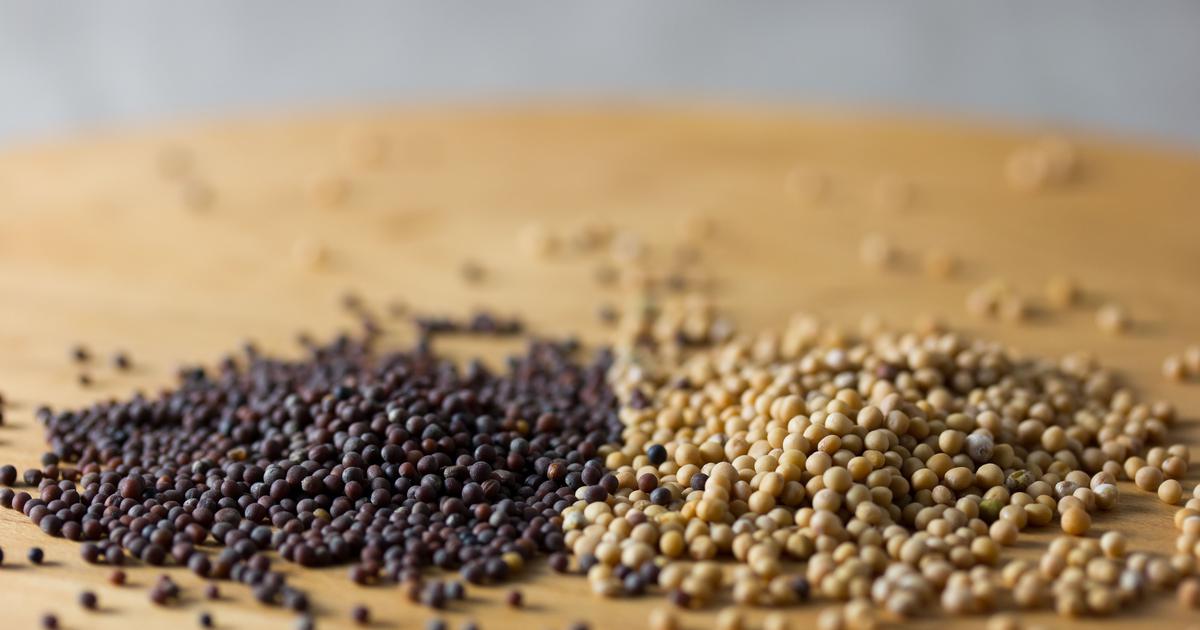
The tiniest seed of the mustard plant is loaded with flavour. So, too, do the fables of religious and secular literature imbue the seed with greatness.
In Buddhist teachings, the mustard seed is used as a notable symbol. In ancient India, mustard was a common household commodity and its seed was considered a magical substance that could help counteract obstacles in life. In both the Hindu and Buddhist tantric traditions, mustard seed (sarshapa in Sanskrit) could be used in rites against all negative influences. Sarshaparuna (literally meaning the red mustard demon) is the name given to a certain spirit that possesses children, potentially referring to scarlet fever.
The Buddhist text Kisa Gotami and the Mustard Seed teaches how death is a part of life. Kisa Gotami was the wife of a rich man in the ancient city of Savatthi in northern India. She experienced great sorrow after losing her only child and was taken to the Buddha. The Buddha told her that he could bring her child back if she could get a white mustard seed from a family which has had no death. After searching house after house Kisa Gotami saw that every house had mustard seed but no house was spared from death. Having learned a lesson about death, Kisa Gotami returned to the Buddha enlightened and accepting of her loss.
In Jewish texts, the universe is compared to a mustard seed to demonstrate that all that exists now was packed into the tiniest imaginable speck of space at the universe’s beginning. Nahmanides, a medieval Jewish scholar of the thirteenth century, described the universe as having expanded from the time of its creation, at which time it was the size of a mustard seed: “At the briefest instant following creation all the matter of the universe was concentrated in a very small place, no larger than a grain of mustard.”
The Bible uses the black mustard seed as a symbol of large growth from small beginnings in the Parable of the Mustard Seed, which appears in Matthew 13:31–2:
He set another parable before them, saying, “The Kingdom of Heaven is like a grain of mustard seed, which a man took, and sowed in his field; which indeed is smaller than all seeds. But when it is grown, it is greater than the herbs, and becomes a tree, so that the birds of the air come and lodge in its branches.”
The same metaphor also appears in Mark 4:30–32 and Luke 13:18–19 and in the non-canonical Gospel of Thomas (verse 20). The minuteness of the grain came to symbolise small beginnings. In the stories, because the seed is hot when it has been crushed, it is attractive to birds that are drawn to the plant for food and shelter. As mustard in reality does not grow into a tree and the mustard plant does not attract nesting birds, a plant becoming a tree might suggest an expansion beyond its nature. The birds are generally interpreted as converts coming to Christianity, but others have interpreted them as satanic creatures invading the Church. In any case, the choice of mustard seed is very interesting as it is neither the smallest seed on earth nor does it grow into a tree. Mustard is more like a bush. As Pliny the Elder writes: “It grows entirely wild, though it is improved by being transplanted: but on the other hand when it has once been sown it is scarcely possible to get the place free of it, as the seed when it falls germinates at once.” So it is probable that the biblical significance of mustard in this parable is its hardiness and resilience.
In Matthew 17:20 we find the mustard seed representing faith.
He replied, “Because you have so little faith. Truly I tell you, if you have faith as small as a mustard seed, you can say to this mountain, ‘Move from here to there,’ and it will move. Nothing will be impossible for you.”
Today, it is possible to buy a single mustard seed embedded in a glass necklace as a sign of one’s faith.
It is said that Christians carried mustard seeds and scattered them as they walked so mustard plants grew along their pilgrimage trails.
One of the places is a Bible trail in California, supposedly visible from space when its yellow flowers are in bloom. The city of Gonzales in Monterey County, California, has a trail marker and a mural to celebrate the mustard seed trail. The legend of ‘the mustard seed trail’ is rooted in the Portolà expedition, which travelled through the Ohlone tribal lands carrying sacks of mustard seeds. These seeds were spread behind them as they travelled north in the winter, marking a trail for their return in the spring by a blooming yellow pathway. The Portolà was the first recorded Spanish (or any European) land entry and exploration of the present-day state of California, in 1769–70. The expedition was led by Gaspar de Portolà, who became the first governor of California. Three groups travelled by sea, while two other groups travelled by land on mule trains.
Portolà’s path would later be called El Camino Real (The King’s Road), a 1,125-kilometre (700-mi.) footpath that ran along the coast from San Diego to Sonoma, connecting 21 missions founded by Franciscans. Many claim that Franciscans sowed mustard seeds along the primitive route to mark the way for travellers. It is said that grape vines were planted on the same trail, and therefore mustard plants are seen along the vineyards in California, from San Diego to Sonoma. Each spring, mustard plants bloom in bright yellow along much of US Route 101, which traces the Old Camino trail.
It is not possible to prove this story true or false as mustard might have been spread along the route before the Franciscans arrived. Juan Crespí, the chronicler of the Portolà expedition of 1769, was struck by the fact that grasslands had recently been burned down by the local inhabitants. But there is no mention of the expedition sowing mustard seeds then. Another theory is that mustard seeds travelled from Spain by accident, on the livestock Juan Bautista Anza brought to southern California with the first colonists in 1775.
What is known is that the Spanish introduced plants into this area, most notably wild oats and mustard, which dominated coastal pasture by 1900. Wildflowers, filaree and clover were in the interior instead. In the 1920s, the inland pastures of Riverside and San Bernardino were further transformed and dominated by wild oat and mustard fields.
Mustard seed is also to be found in the Quran, referring to something small in weight, to represent the justice that will be brought forth by Allah. “None shall enter the Fire (of Hell) who has in his heart the weight of a mustard seed of Iman [faith] and none shall enter Paradise who has in his heart the weight of a mustard seed of pride.”
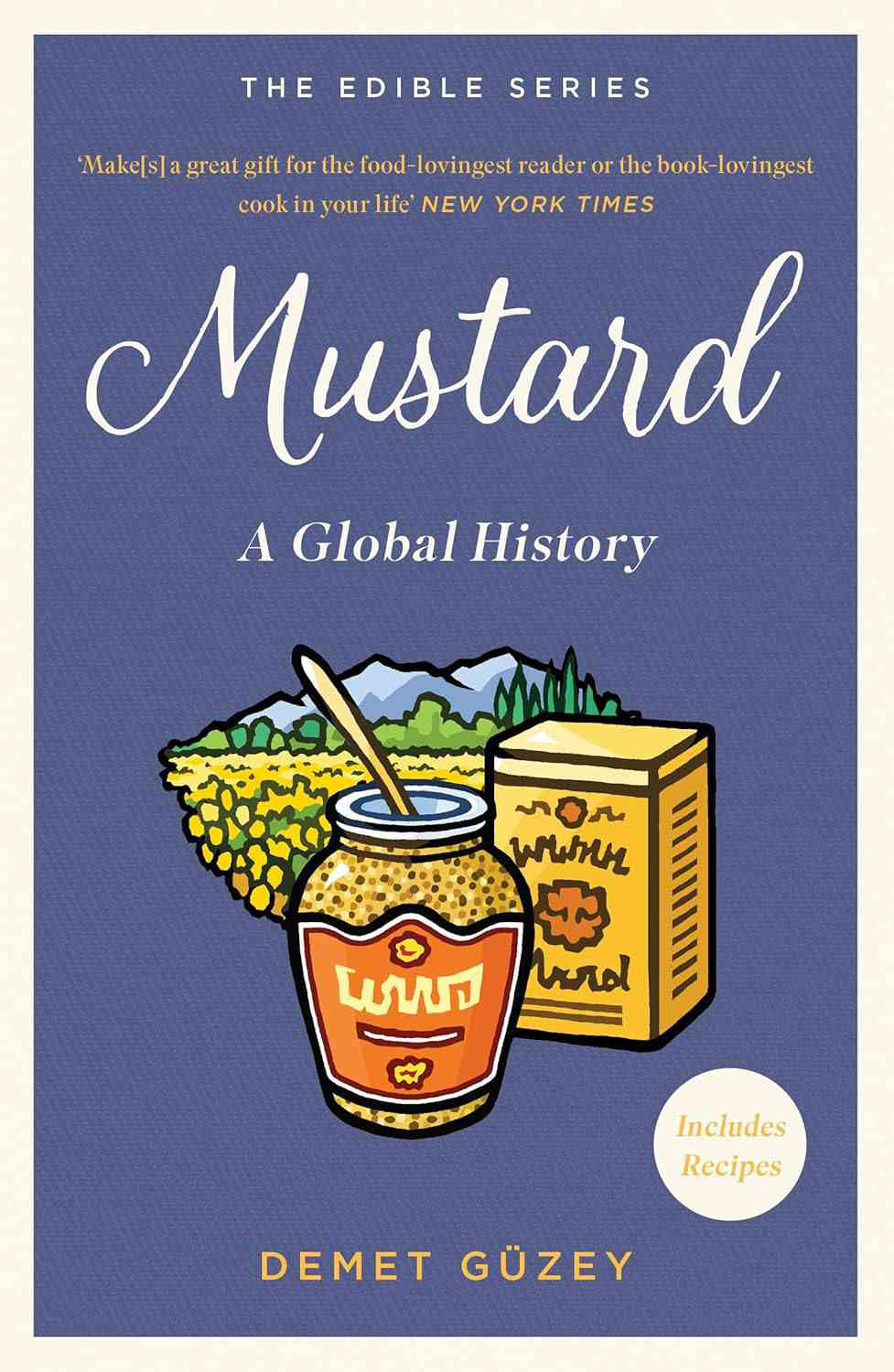
Excerpted with permission from Mustard: A Global History, Demet Güzey, Pan Macmillan.
